Material chapter 02 / Binder chemistry
Understand the activated binder route
An alternative reaction can create a useful binder. The name of that reaction does not settle the questions of manufacture, durability or environmental impact.
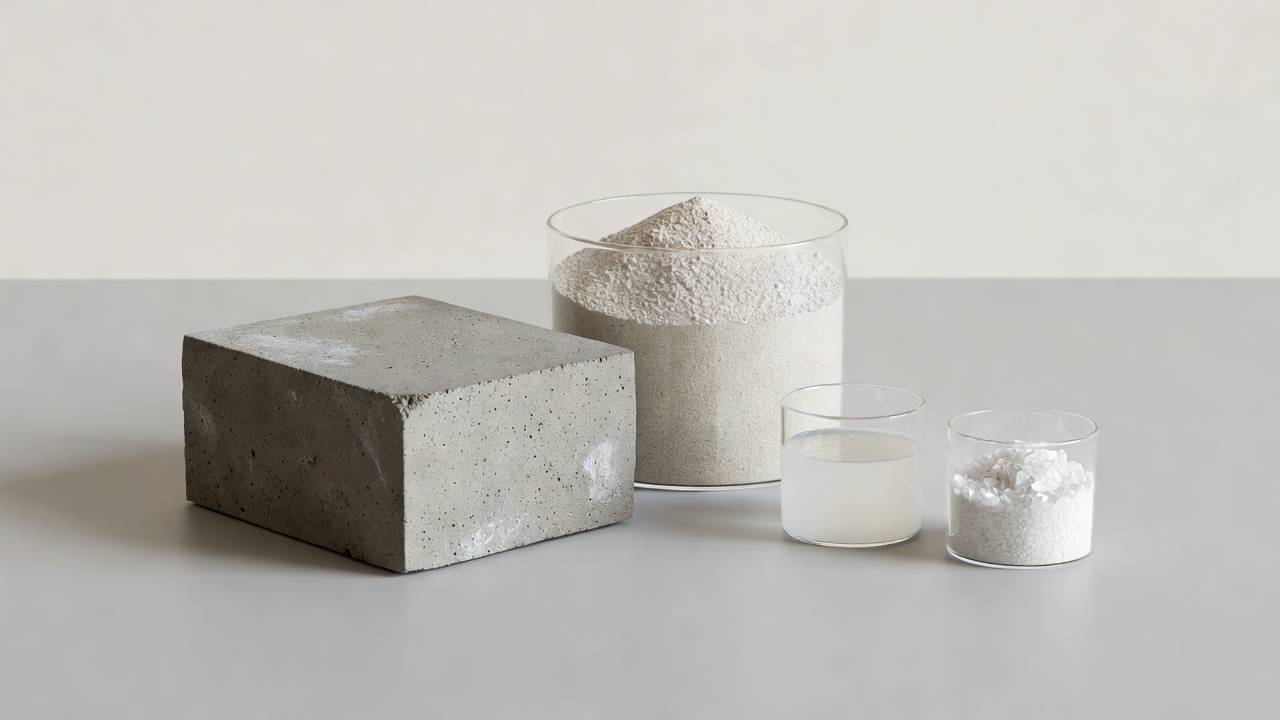
A family, not a single recipe
Alkali-activated materials use a reactive precursor with an alkaline activator to form a hardened binder. Precursors can include suitable slags, fly ashes, calcined clays or other mineral sources. The chemistry depends on the precursor’s composition and physical characteristics, the activator and the curing environment. Two products described as alkali-activated concrete may therefore differ substantially in production requirements and in-service behaviour.
The term “geopolymer” is often used in this area, but it is not a reliable synonym for every alkali-activated binder. Some systems are rich in calcium; others form different reaction products from low-calcium aluminosilicate precursors. For specification, ask for the actual system, composition controls and evidence rather than relying on a broad marketing category. The distinction matters because a test result from one chemistry may not transfer to another.
Ask what the activator contributes
Activators may include alkaline hydroxides, silicates or combinations supplied in liquid or solid form. Their manufacture carries environmental burdens, and handling can require specific safety measures. An assessment that counts an industrial by-product precursor as having little burden while overlooking activator production is incomplete. The exact formulation and supply chain are essential inputs to any credible comparison.
There are practical consequences too. Storage arrangements, batching accuracy, worker training and compatibility with equipment need attention. A proprietary, ready-to-use system can present different site conditions from a laboratory process involving separately handled chemicals. The relevant safety data sheets and producer instructions should govern use. A claim about lower carbon does not reduce the responsibility to control occupational exposure or chemical handling.
Put curing and production into the assessment
Some formulations can harden under ambient conditions; others benefit from or require elevated-temperature curing. A heat-cured precast element and an in-situ structural pour should not be discussed as if they share the same production route. Where heat is required, include its source, duration and energy demand in the environmental boundary. Transport to a specialist facility may also change the balance.
Consistency matters as much as the initial reaction. Precursor fineness, glass content, moisture and chemical variability can affect workability, setting and strength development. Ask how incoming materials are tested, how formulation adjustments are controlled and how batches are accepted. The useful evidence is production evidence for the proposed system, not only a successful research specimen prepared from a carefully selected feedstock.
A different binder still has to arrive as a dependable construction material.
Editorial synthesis of the production and durability questions explored in RILEM research.
Test durability against the intended exposure
High compressive strength alone does not establish service life. Carbonation, chloride exposure, shrinkage, reinforcement compatibility, fire behaviour and chemical resistance may require specific examination. Some conventional test methods were developed around Portland cement systems, so interpretation and transferability need competent review. That is a reason for suitable evidence and agreed acceptance criteria, not a reason to dismiss or approve an entire material family.
For reinforced applications, ask how the proposed system supports protection of steel under relevant conditions. Review field experience where it exists, accelerated testing with its limitations, and the assumptions linking those results to the intended design life. Claims of excellent performance should identify the exposure, test method and formulation. A result cannot be detached from the conditions that produced it.
Resolve the route to acceptance early
Standards and regulatory pathways differ across jurisdictions. Do not assume that compliance with a familiar cement standard automatically covers a binder with a different chemistry. The design team, producer, contractor, approving bodies and insurer may need to agree an appropriate route before procurement. Product certification, technical assessment and project-specific demonstration can play different roles depending on the application.
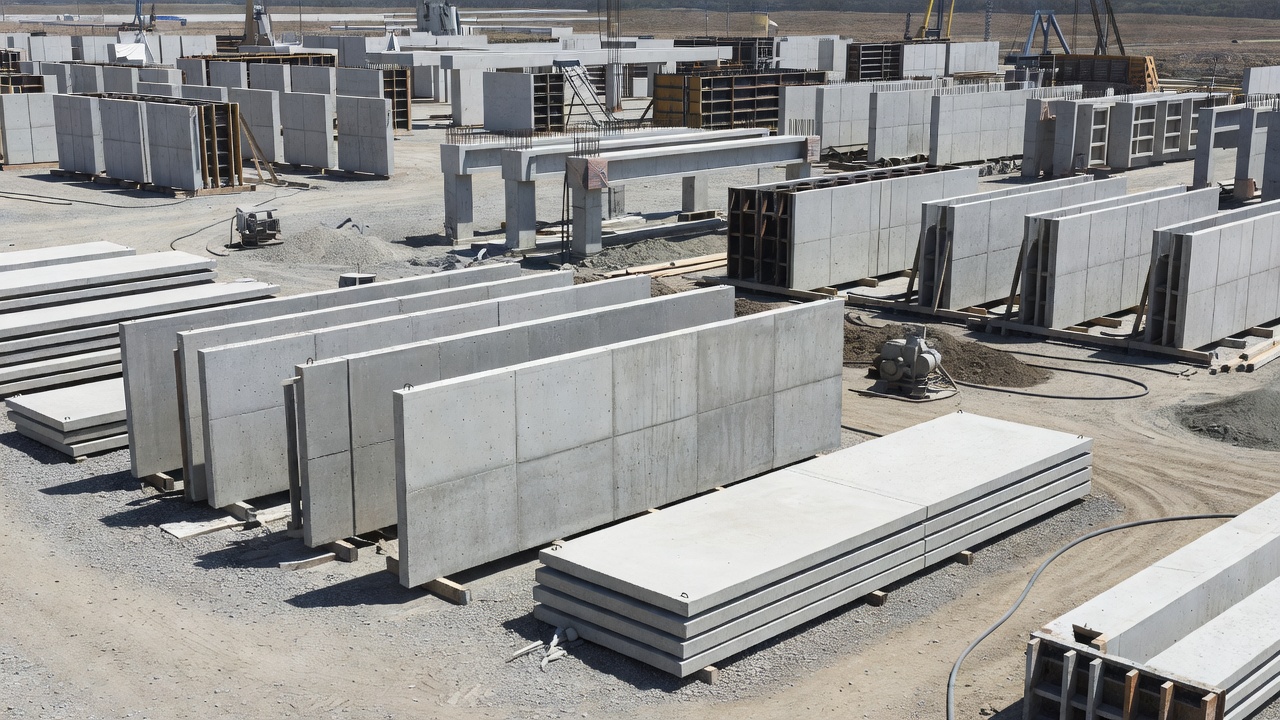
This work should happen before a construction programme depends on immediate substitution. Trial production can explore pumpability, finishing, curing, connections and interfaces as well as strength. Precast manufacture may offer useful process control, but it does not remove the need for structural and environmental evidence. Record who accepts each performance criterion and which changes to the formulation would trigger reassessment.
Keep the carbon comparison system-specific
Assess the proposed binder and concrete using compatible lifecycle rules and an equivalent functional task. Include precursor processing, allocation choices, activator production, curing energy, transport and any changed material quantities. A system can reduce production emissions relative to a suitable reference, but a generic percentage cannot represent every formulation or location. Broader environmental indicators and worker-safety requirements should remain visible beside climate metrics.
The most useful specification does not ask for novelty. It asks for a controlled material, an accepted route to use and transparent environmental evidence. If those conditions are met, alkali activation becomes a technical option to compare rather than a label to celebrate or reject.
Further evidence
Use RILEM to locate technical research and the ISO catalogue for lifecycle assessment standards. Check applicable requirements through local standards bodies and consult our evidence index before comparing declarations.
Follow the carbon uptake route