Material chapter 03 / Carbon uptake
Follow carbon into the material
Turning carbon dioxide into a mineral is a physical process. Turning that process into a credible environmental claim requires a complete account.
Understand what is reacting
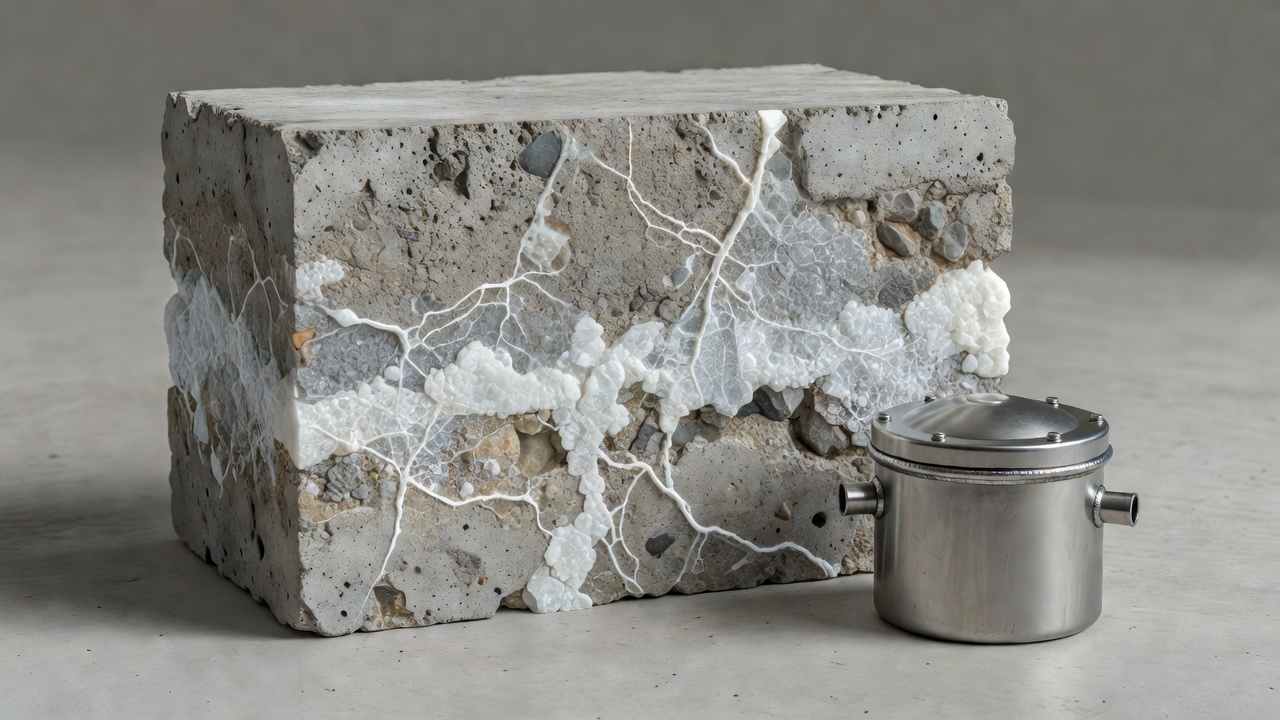
Carbon mineralisation describes reactions in which carbon dioxide becomes bound in carbonate minerals. In construction materials, suitable calcium- or magnesium-bearing constituents can provide the reactive mineral source. Processes may treat fresh concrete, cure certain manufactured products or carbonate recycled mineral feedstocks. These are distinct routes with different equipment, reaction conditions and opportunities for uptake.
Conventional concrete also takes up some carbon dioxide through carbonation during its life and after demolition. That natural process should not be confused with a deliberately controlled industrial treatment. Carbonation can also affect reinforcement protection, so uptake is not automatically a durability benefit. The assessment needs to identify where the reaction happens and whether its consequences are suitable for the application.
Trace the carbon supply
Ask where the carbon dioxide comes from and what would otherwise have happened to it. Captured fossil process emissions, biogenic carbon and carbon removed directly from air do not have identical accounting implications. Capture, purification, compression and transport require resources. A supplier’s measurement of carbon delivered to a plant is not necessarily the amount permanently incorporated into a product.
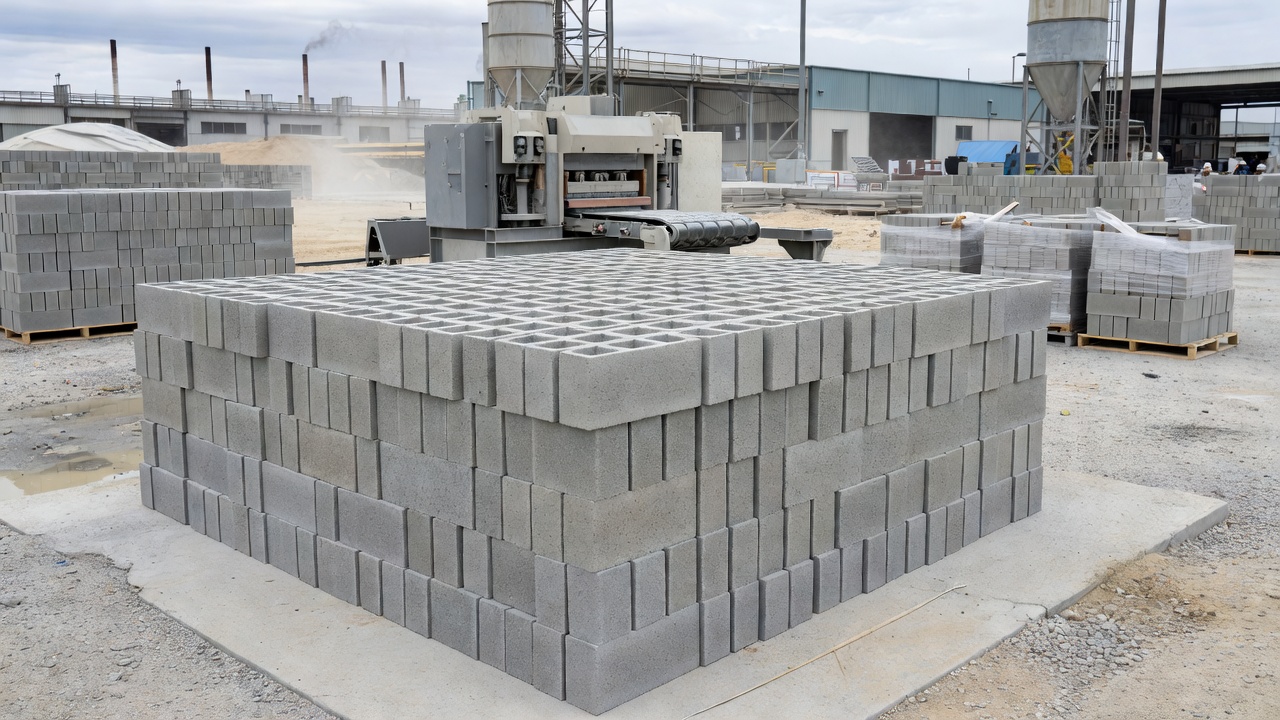
The process may use a gas stream with particular purity requirements. Losses, unused gas and operational energy should be accounted for, along with the treatment of the mineral feedstock. A credible inventory distinguishes carbon entering the system from carbon retained in the final material. Measurement methods, uncertainty and independent verification are more informative than a photograph of a carbon dioxide cylinder beside a concrete block.
Keep three claims separate
First, there is the quantity of carbon stored as a result of the process. Second, there may be avoided emissions if the process allows a validated reduction in cement content or replaces another material. Third, there is the net environmental balance after the relevant production and lifecycle burdens are included. These quantities cannot be used interchangeably, and benefits must not be counted twice.
A carbon-negative claim requires a transparent scope and a balance that supports it. Mineral storage alone does not prove that the complete product has a negative footprint. Likewise, using captured fossil carbon is not automatically atmospheric carbon removal. The origin of the carbon, the counterfactual and the accounting method determine which language is justified. Where a claim also relies on certificates or offsets, those should be separated from physical product performance.
“Contains stored carbon” and “has a negative footprint” are not the same sentence.
Editorial distinction grounded in lifecycle assessment principles; see ISO 14044.
Check the material as carefully as the carbon
Mineralisation can change particle characteristics, strength development or mix behaviour, depending on the process. Those effects should be demonstrated for the actual product and use. A treatment of recycled fines does not carry the same technical evidence as injection into a fresh structural concrete mix. Ask which constituent changes, how quality is controlled and what the resulting concrete has been tested to do.
For reinforced or loadbearing applications, the normal questions remain: exposure suitability, structural properties, curing, dimensional behaviour and acceptance. Environmental data cannot stand in for those tests. Equally, a well-performing block does not establish the carbon balance of the manufacturing process. The technical and environmental dossiers should support each other while remaining distinct records.
Locate storage within the lifecycle
Carbonates can offer durable storage under appropriate conditions, but permanence claims need to address the expected material pathway. Consider demolition, crushing, reuse and any future processing that could release carbon. A building-level assessment also needs to avoid attributing the same uptake to multiple lifecycle stages or multiple organisations. The reported treatment of future carbonation should follow the relevant assessment rules.
Product EPDs can help where their methods and boundaries are appropriate, but declarations are not interchangeable merely because both report carbon dioxide equivalents. Check the declared unit, lifecycle modules, treatment of uptake and end-of-life assumptions. Any benefits beyond the product system should be reported in the proper place rather than silently deducted from production emissions.
A boundary for the claim
Ask for the net result and its working
A useful supplier submission explains the reference product, measured uptake, energy inputs, any binder reduction and the verification method. It should identify assumptions rather than compressing them into a single headline. Where evidence is confidential, a suitably verified declaration may still support a decision, but the scope and limitations need to remain accessible to the project team.
Mineralisation may complement other interventions, including clinker reduction or aggregate reuse. Do not add separate promotional percentages together. Assess the combined product as supplied, using one coherent inventory. The aim is not the largest-sounding carbon number; it is a dependable construction material with an understandable and defensible environmental account.
Evidence to consult
Use the IPCC mitigation assessment for wider context, IEA cement resources for sector analysis and the International EPD System for declaration examples and rules. The evidence index lists the lifecycle standards behind this chapter.
Examine the existing mineral stock